Faculty Vacancies, Poor Infrastructure Hit Telangana’s Foreign Student Enrolment
Faculty vacancies in Telangana's higher-education sector have reached a critical threshold. According to the Union education ministry's All India Survey on Higher Education (AISHE), Prof. P.L.
The structural gap behind the numbers
Dr. K.P. Rao, honorary professor at the University of Hyderabad, frames the competitiveness gap directly: institutions in the state, with limited exceptions among Indian Institutes of Technology and select private colleges, do not meet foreign-university standards. The cited deficit spans teaching quality, infrastructure, modern curriculum modules, hostel capacity, and institutional ranking.
Programme mismatch and current enrolment baseline
The problem is not only supply-side. Prof. V. Balakista Reddy, chairman of the Telangana Higher Education Council, notes that course selection itself is misaligned with international demand. Universities continue to offer programmes with limited overseas appeal rather than subjects students cannot access at home. The council's stated response: new courses in trade, business, and aviation.
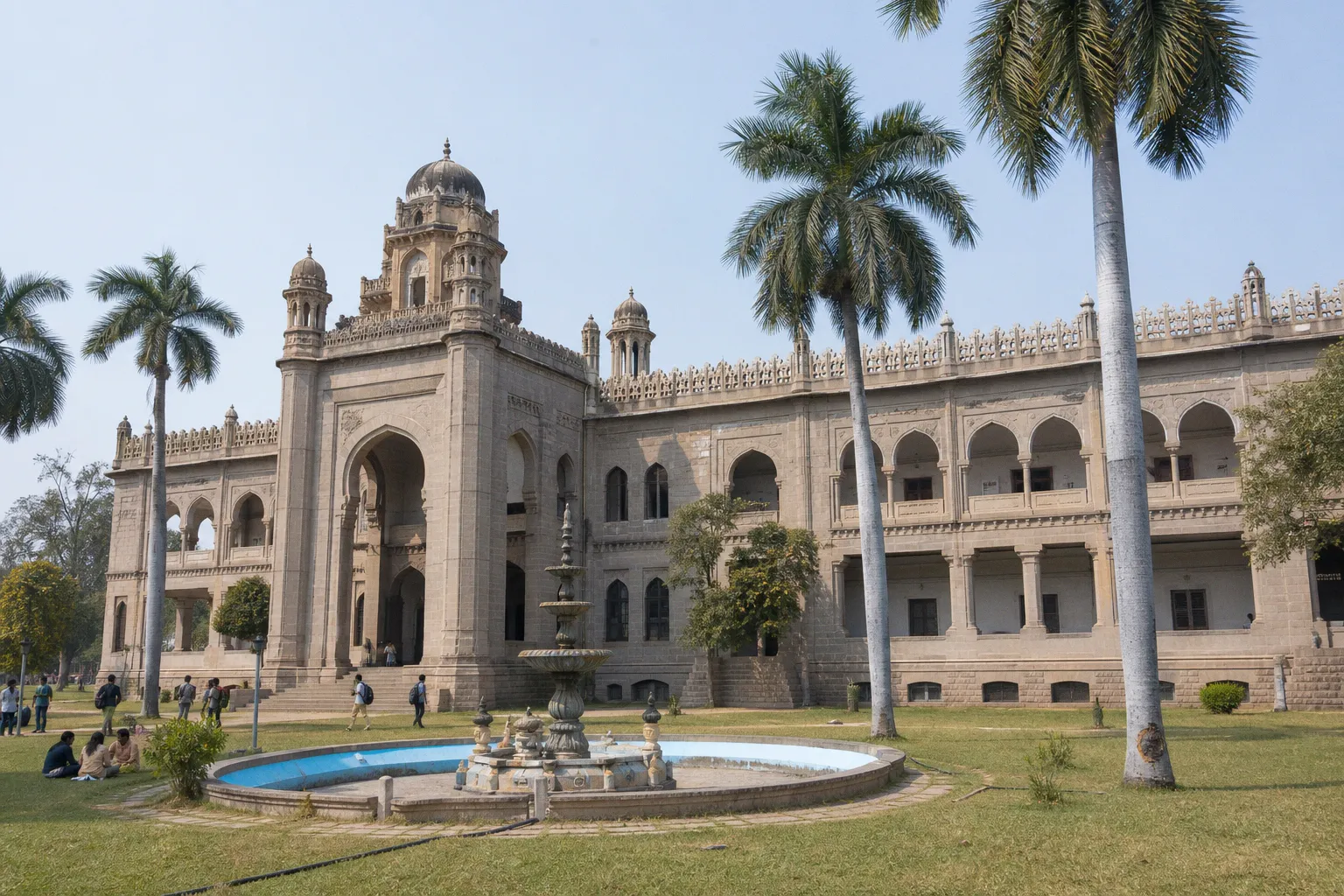
Osmania University's current foreign-enrolment baseline is the cleanest data point available:
- Stated total: 463 foreign students across UG, PG, and PhD
- Category breakdown (394 by program): 349 undergraduate, 37 postgraduate, 8 PhD
- Undergraduate distribution: BCA 99, BA 85, BE/BTech 65, BSc 59, BCom 41
- Postgraduate distribution: MSc 15, MCA 11, MA 11
The 69-student gap between the stated total and the program-level sum is itself a data-integrity flag for prospective applicants.
The university's Office of International Affairs has met foreign-university delegations approximately 17 times under Vice Chancellor Prof. M. Kumar. Planned initiatives include a five-year double-degree programme, twinning arrangements, short-term training, diploma courses, semester-abroad options, and bidirectional student-faculty exchanges. These remain proposals, not operational guarantees.
What to verify before applying
For applicants evaluating Telangana as a destination, the enrolment data suggests a targeted due-diligence sequence:
- Faculty-student ratio. An 80% vacancy rate at the state level is a baseline, not a uniform figure. Request the department-specific ratio for the programme under consideration.
- Accreditation status. Confirm recognition with the relevant Indian regulator and any bilateral agreements that affect credit transfer.
- Curriculum fit. Programmes in trade, business, and aviation are flagged as upcoming — not currently delivered. Verify operational status and intake dates.
- International office capacity. The 17 reported delegation meetings indicate activity, not outcomes. Ask for a list of executed exchange agreements and active partner institutions.
- Alternative benchmarks. National context matters: India-wide foreign enrolment rose 19% over the past five years, and Karnataka — not Telangana — is the top-receiving state. Compare programme fit, faculty density, and ranking before committing.
The Telangana case is a structural signal. Vacancy rates, course design, and infrastructure are the three variables that determine whether the state remains a viable option for international students or continues to lose share to better-resourced competitors.