New DHS Visa Rules Create Uncertainty for International Students in the U.S.
According to reporting by Forbes and Inside Higher Ed, the Department of Homeland Security has finalized a rule replacing the longstanding "duration of status" policy with a hard four-year cap on F-1 and J-1 visas.
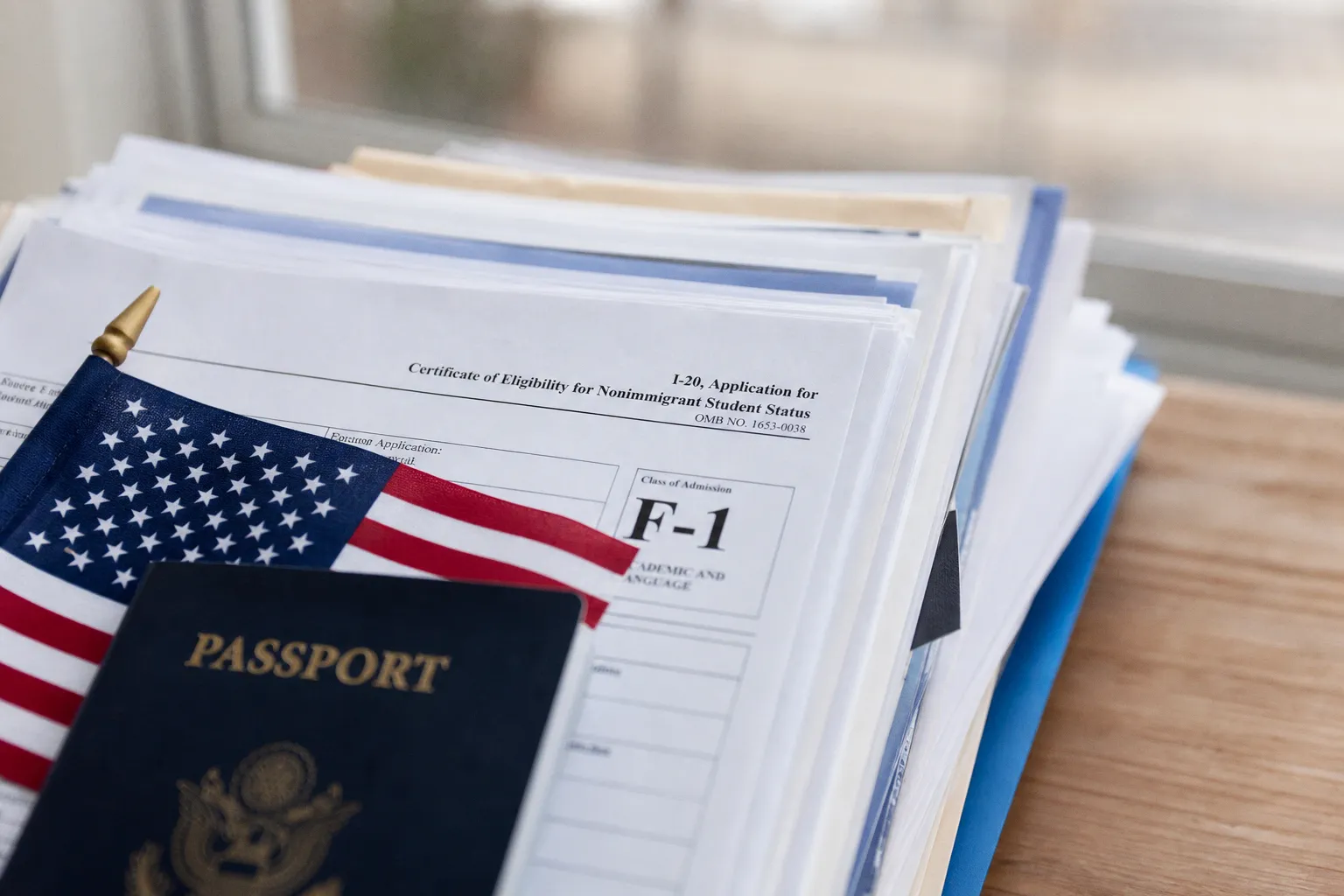
When your four-year visa expires but your Ph.D. still has two years of coursework and a dissertation ahead, you're suddenly dependent on an extension you may or may not receive — and that's the new reality facing international students in the United States. According to reporting by Forbes and Inside Higher Ed, the Department of Homeland Security has finalized a rule replacing the longstanding "duration of status" policy with a hard four-year cap on F-1 and J-1 visas. The change, slated to take effect on September 15, essentially forces students to prove they still belong in the country every time their clock runs out.
If you're planning to study in the U.S. — or you're already there — keep in mind that this rule doesn't just affect how long you can stay. It also restricts your ability to change majors or transfer institutions once you've arrived. That's a significant shift for anyone who discovers a new academic passion midway through their degree, which, honestly, is more common than most people think.
What "Duration of Status" Used to Mean — And Why It Mattered
Under the old system, you were admitted for the duration of your academic program. That meant you could enter as an undergraduate, continue into a master's, and then pursue a Ph.D. without needing fresh government approvals each step of the way. Essentially, your visa stayed valid as long as you were enrolled and making progress.
That flexibility was a buffer against the unpredictable nature of academic life. Research takes longer than expected. Advisors change. Funding gaps delay dissertations. The old policy understood that education doesn't always fit neatly into a four-year window, and it gave students the peace of mind to focus on their studies rather than paperwork.
Now, DHS has acknowledged that students may legitimately need more than four years, but officials frame the new rule as a "law enforcement and screening tool" to verify normal academic progress. The department has pointed to roughly 2,100 international students who entered on F-1 visas between 2000 and 2010 and still hold that status today as justification for tighter oversight.
Who Feels This Most: Graduate and Doctoral Students
If you're pursuing an undergraduate degree and expect to finish in four years, this rule may not change your day-to-day life dramatically. But keep in mind that the average U.S. undergraduate actually takes longer than four years to complete a bachelor's degree, so even that assumption can be shaky.
Where this really hits is at the graduate and doctoral level. Almost all Ph.D. programs exceed four years. Medical residencies, joint-degree programs, and research-intensive tracks are all designed around timelines that stretch beyond this new cap. Students pursuing Optional Practical Training after graduation — a common pathway to work experience in the U.S. — typically stay in the country more than four years total.
If you're a current student already in the U.S., there is a transitional provision: you can remain through your current program period or up to four additional years, whichever applies. But if you're still in the planning stages, you'll need to navigate your timeline more carefully than before. Think about whether your program realistically fits within four years, and if not, what the extension process looks like and whether your institution has resources to help you through it.
What You Can Do Right Now
If you're affected — or about to be — here's a practical starting point. First, talk to your university's international student office as soon as possible. They've been fielding questions about this rule since the proposal surfaced in August 2025, and they'll know the latest guidance. Second, keep meticulous records of your academic progress. If you need to apply for an extension, showing consistent enrollment and forward momentum will be essential. Third, stay aware of your visa expiration date as a hard deadline, not just a formality.
It's also worth noting that this policy isn't entirely new terrain. The first Trump administration attempted the same change, but it was reversed under President Biden after legal challenges. With nearly 22,000 public comments — the vast majority opposing the rule — there's a reasonable chance of further pushback, whether from universities, advocacy organizations, or the courts.
None of that changes what you need to do today, though. Keep your documents in order, stay in close contact with your institution, and build a realistic timeline for your degree that accounts for this new four-year framework. The rule introduces uncertainty, yes — but with the right preparation, you can still navigate your path forward.